A bus every six minutes. A stop inside a quarter-mile walk. No American stranded because they cannot afford a car.
WHAT THEY TOOK — PER HOUSEHOLD · PER YEAR
A representative American household in a city that had streetcars in 1945 and has a 45-minute bus in 2025. The car is not freedom. The car is the tax the extraction class charges the country they paved over.
Pattern drawn from AAA Your Driving Costs, FHWA Highway Statistics, NTD agency filings, Donald Shoup's parking-land research, and 10-K filings of the public aggregates producers. Numbers illustrative of the pattern; the pattern is the fact.
THE LINE ALREADY RAN
Every layered transit system the Transit Corps requires has already been built, run, and in most cases torn out of American cities and rebuilt abroad. What does not exist is an owner whose patience is longer than the next highway appropriation, and whose shareholders are the Americans riding the line.
Tokyo JR · Metro · Keio · Tokyu · Odakyu
Layered heavy rail, metro, and private commuter lines — roughly 40M daily riders
Paris Métro
Sixteen lines, 308 stations, built on municipal authority
Vienna Klimaticket
€365/year transit pass — €1/day — 76% of Viennese hold one
Zürich VBZ
Tram-bus-S-Bahn integration — ~550 annual trips per resident in a city of 430,000
Utrecht cycling network
Protected infrastructure — 51% of trips under 7.5 km by bicycle
Bogotá TransMilenio
Bus rapid transit on dedicated lanes — ~2.5M daily riders built on road right-of-way
Pacific Electric Red Cars
1,100 route-miles of electric interurban rail — ripped out, thesis proved, ownership failed
Greenbelt, Maryland
Walkable new town at 18 homes per acre, transit at the corner — still walking a century later
None of this is science fiction in 2026. The Transit Corps is a scheduling and right-of-way problem, not an engineering one. What changed is the owner.
SCENE · CHICAGO SOUTH SIDE · 79TH STREET · 5:47 AM
January. Twelve degrees. The commandant stands on the curb at 79th and Halsted with a coffee going cold in his glove. The express lane is painted red from Dan Ryan to the lake, and the paint is still new enough that the salt has not eaten the edges yet. A bus comes down the lane at 5:47 and the pressure plates at the platform take its weight and raise the rear door level with the curb. The third-shift nurse from Provident boards without breaking stride. She is carrying a plastic bag from the Jewel. She does not look at the commandant because she has been riding this line for twenty-two years and this is the first winter the bus has come when it said it would. Eleven-hundred riders before noon, on a corridor his grandmother rode a streetcar down in 1951. He drinks the cold coffee. He watches the next headway light come up green six minutes out.
SPECIFICATION
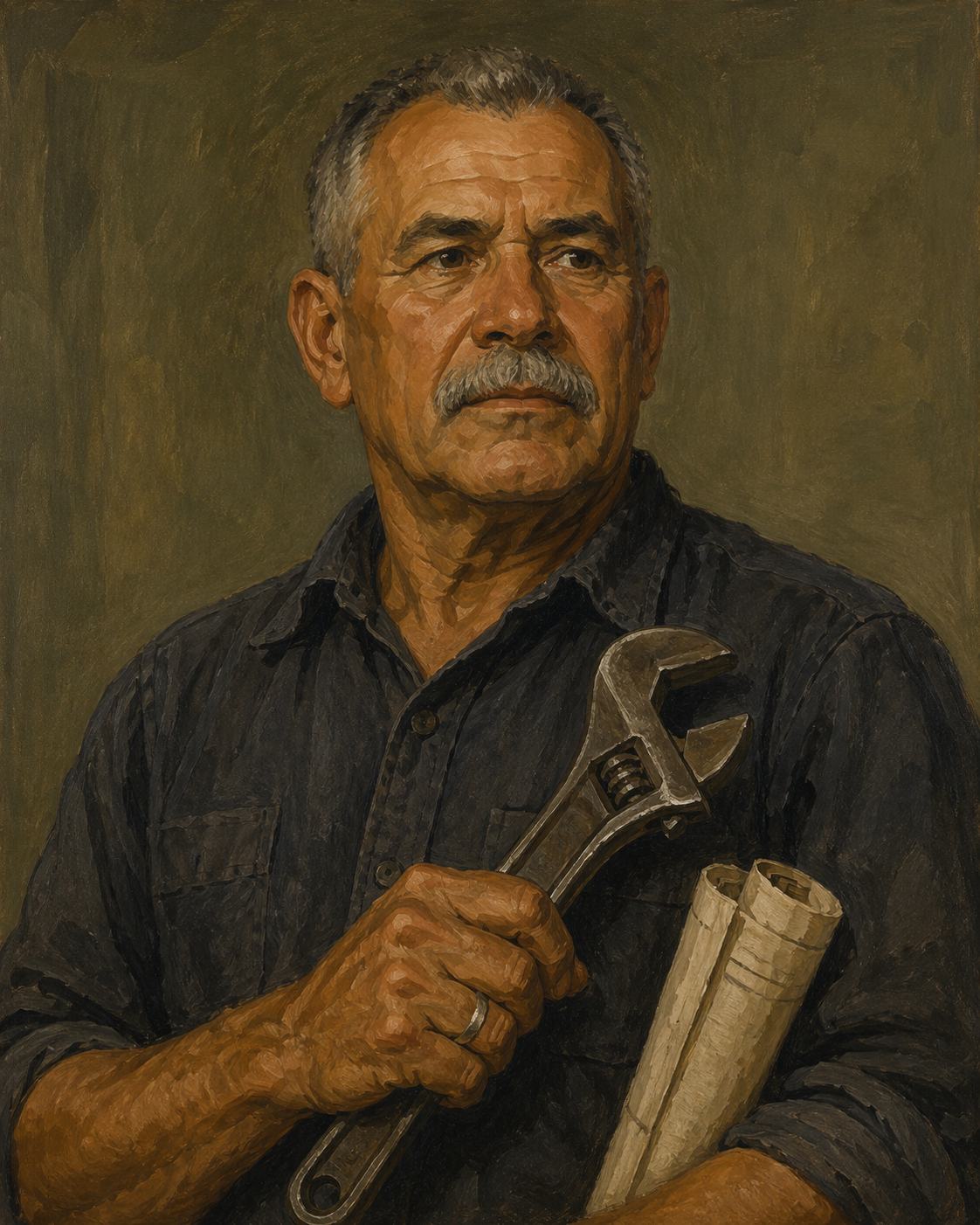
ARCHETYPE · FIRST COMMANDANT
Raul Castillo*
- ASE master transit bus technician. Purdue Northwest, industrial and transportation engineering.
- Thirty-eight years — NICTD mechanic to senior operations, American interior.
“My grandmother rode a streetcar down this street in 1951. We are putting the line back.”
Composite — drawn from interviews and public record. The commandant is archetype. Named corporations, settlements, filings, and enforcement actions are matter of SEC, DOJ, or state public record.
BEFORE · AFTER
THE CORRIDOR
Six-lane arterial. 35 mph posted, 48 mph driven. No bus lane. School across four lanes of traffic.
Two general lanes. One red-painted transit lane. Protected bike lane. Sidewalk widened. Speed 25. School on the near side.
THE BUS
45-minute peak headway. No shelter. Fare $2.50. Rear door step up fourteen inches from a cracked curb.
6-minute peak headway. Heated platform. $1/day annual pass. Level boarding at every stop.
THE CAR
$12,297 a year per household to own. Parking mandated by zoning. 30% of downtown land paved for storage.
Owned if wanted, not required. Parking priced to the market. Land returned to housing, storefront, and park.
THE OPERATOR
Split shift. Private contractor. $19/hour. No benefits. Agency churning three drivers a year on the same run.
$78,000 start. Home. Care. Pension. Career track to shop foreman, planner, line superintendent.
BOARD THE CORPS
The 28th Amendment makes every American a shareholder in the country the Corps are building.
Read the constitutional text. Eighty-seven seconds.
Read the amendment