
Your doctor knows your name. Forty-five minutes at the visit. No bill at the door.
WHAT THEY TOOK — PER PATIENT
A representative working family in the American interior. Eleven minutes with a doctor running on a corporate productivity panel. Ninety-eight dollars for a vial of insulin the factory produced for under ten. The spread is what the pharmacy benefit manager kept for standing between the drug and the patient — while the nurse, the pharmacist, and the doctor did the work.
Pattern drawn from the FTC interim staff report on pharmacy benefit managers (2024), the Senate Finance Committee insulin investigation (2021), CMS Medicare Part D records, and published 10-K filings of the Big Three PBM parents. Numbers illustrative of the gap; the gap is the fact.
THE CURE ALREADY EXISTS
Every system the Medical Corps requires — salaried physicians, integrated primary care, care at the door, a formulary that serves the patient instead of the middleman — has already been built. The thing that does not exist is an owner whose patience is longer than the next quarter's earnings call, and whose shareholders are the patients.
Mayo Clinic
Salaried-physician group practice — doctors on salary, not piece-rate, since 1919
Kaiser Permanente
Integrated payer-provider — salaried doctors, prepaid care, founded in the shipyards
National Health Service
Universal care, free at the point of use, 18 months from legislation to doors open
Taiwan NHI
Single-payer built in under three years; ~6% of GDP on healthcare against the U.S. ~18%
Nuka System of Care
Customer-owned primary care — Alaska Native communities own their own system
Geisinger ProvenCare
Bundled-payment surgical care; collapses the billing layer around a single episode
EBAIS community clinics
Team-based primary care on every block — doctor, nurse, community worker — life expectancy above the U.S.
VHA Patient Aligned Care Team
Salaried primary-care team model — panel continuity, home visits, integrated mental health
None of this is science fiction in 2026. The Corps is a scheduling problem, not a medical one. What changed is the owner.
SCENE · ENGLEWOOD, CHICAGO · THE EXAM ROOM
Eight-forty on a Thursday morning. The commandant is sitting on the low stool with his elbows on his knees, eye level with Mrs. Wade, who has been his patient for nine years. Her chart is open on the tablet behind him but he has not looked at it yet. She is telling him about her grandson, who moved back in after the layoff, and about the sleep that will not come, and about the pressure she feels in her chest when she climbs the three steps to her front porch. He listens. He writes nothing. The clock over the door says eight-fifty-two. In the old corporate clinic on Halsted he would already have been two patients behind. Here he has forty-five minutes with her, and the insulin on the shelf behind him is free, and the nurse practitioner three doors down is waiting to walk Mrs. Wade home and look at the porch steps herself.
SPECIFICATION
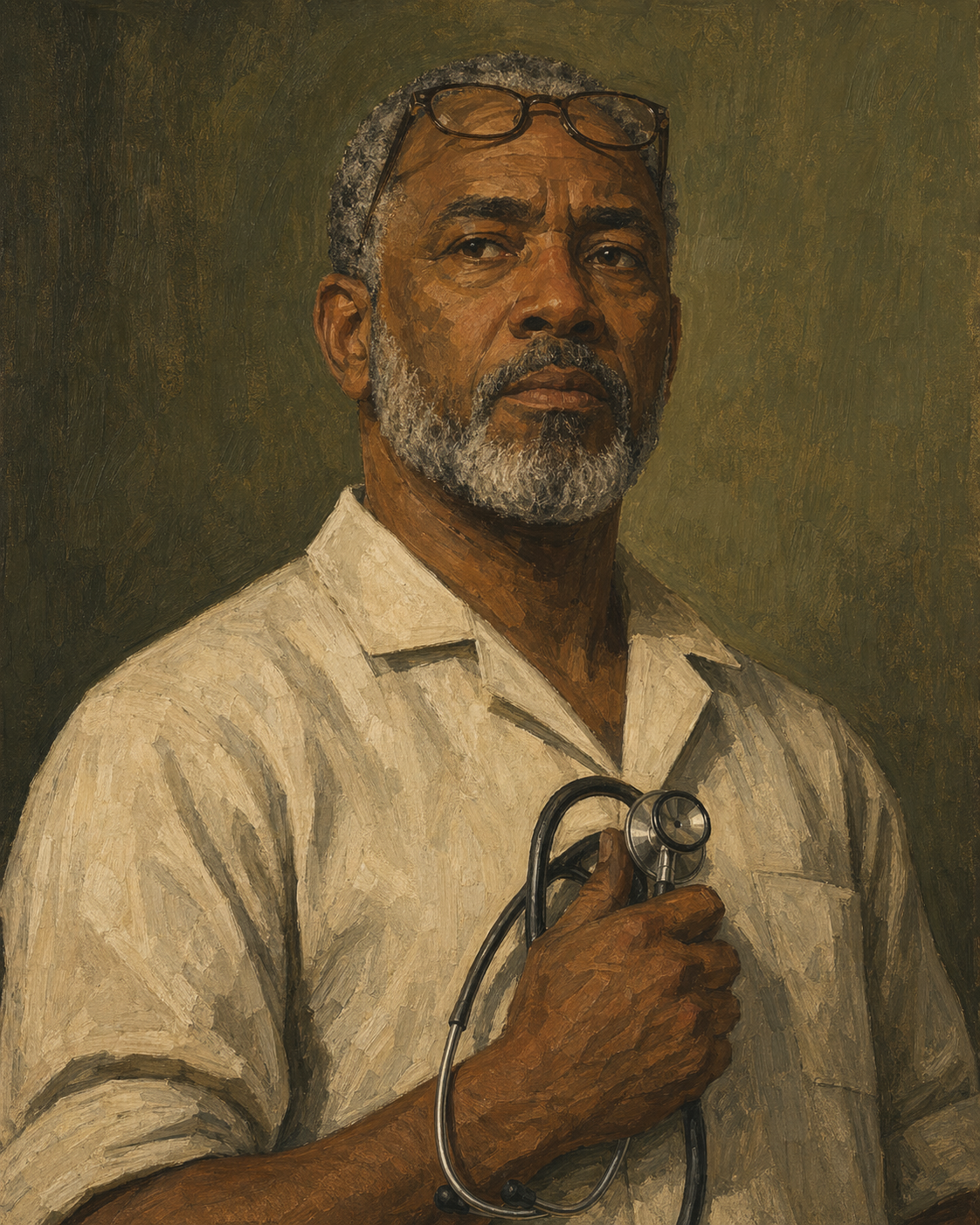
ARCHETYPE · FIRST COMMANDANT
Marcus Jefferson*
- Board-certified family medicine. University of Illinois COM · Cook County residency.
- Twenty-eight years practice — Federally Qualified Health Center, corporate primary care, community clinic.
“I watched the eleven-minute visit miss my neighbors' cancers. We do not do that anymore.”
Composite — drawn from interviews and public record. The commandant is archetype. Named corporations, settlements, filings, and enforcement actions are matter of SEC, DOJ, or state public record.
BEFORE · AFTER
THE VISIT
11 minutes. Panel of 2,500. Doctor typing into Epic. Prior auth queued at the front desk.
45 minutes. Panel of 1,200. Doctor on the stool at eye level. No prior auth — the formulary is the Corps.
THE PRESCRIPTION
$98 for a vial of insulin. PBM rebate pocketed upstream. Rationed in the bathroom.
$0 at the pharmacy window. Insulin produced at cost, distributed at cost. No middleman.
THE HOSPITAL
340B arbitrage, surprise billing, nonprofit tax exemption beside a debt-collection subsidiary.
Bundled care, no surprise bill, hospital owned by the shareholders of the country it serves.
THE CLINICIAN
Productivity panel. RVU target. Burnout at 55% of primary care per the AMA's own surveys.
Salary. Panel. Career. Home. Care. Pension. The clinician chose the work and stayed in it.

CLAIM YOUR CARE
The 28th Amendment makes every American a shareholder in the country the Corps are building.
Read the constitutional text. Eighty-seven seconds.
Read the amendment