Portland, Oregon · The parcel is real · The letter is dated 2045
Issued · May 2026 · Filed under THE WORKS
One letter · six beats
A letter to my grandson.
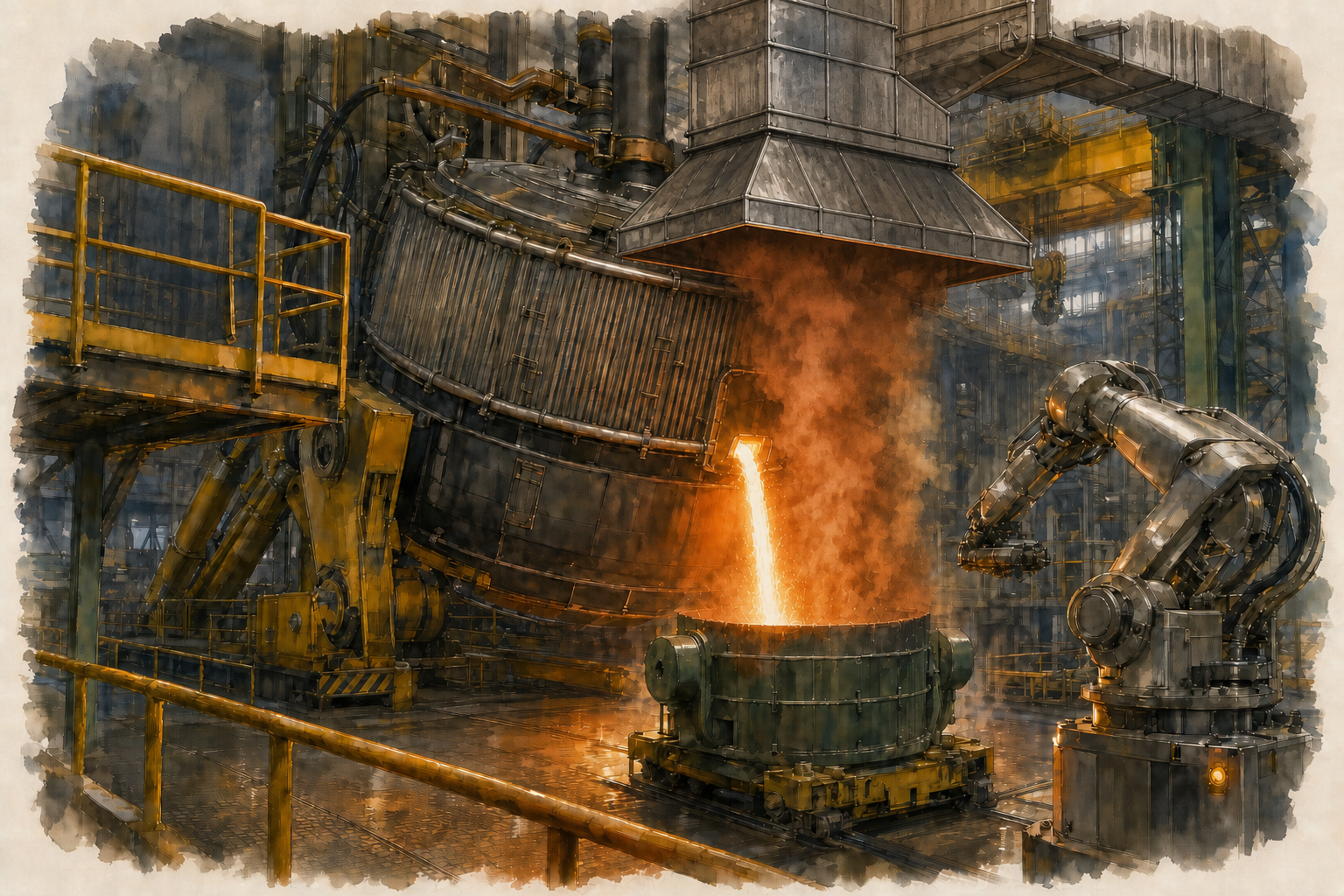
The Rivergate parcel sits on the Willamette River in Portland. The furnace has been cold since 2003. A foreman writes through one night to the grandson taking the floor at six in the morning.
Daniel —
I'm sorry I'm doing this on paper instead of saying it. Your mother says give him the letter and let him read it on the bus, and your mother knows you better than I do at eighteen, so I'm at the kitchen table and the coffee is on and I'm writing it.
I wanted to say something at supper and the words weren't where I needed them. They are coming now. They might come slow. The bus doesn't leave until 6:40 so you have time.
Before I get to any of it, I want you to know about the place you walk into in the morning. I'm putting a picture in the envelope with this. It's the parcel from the air, in 1973. My dad started here in 1968. He was twenty-one.
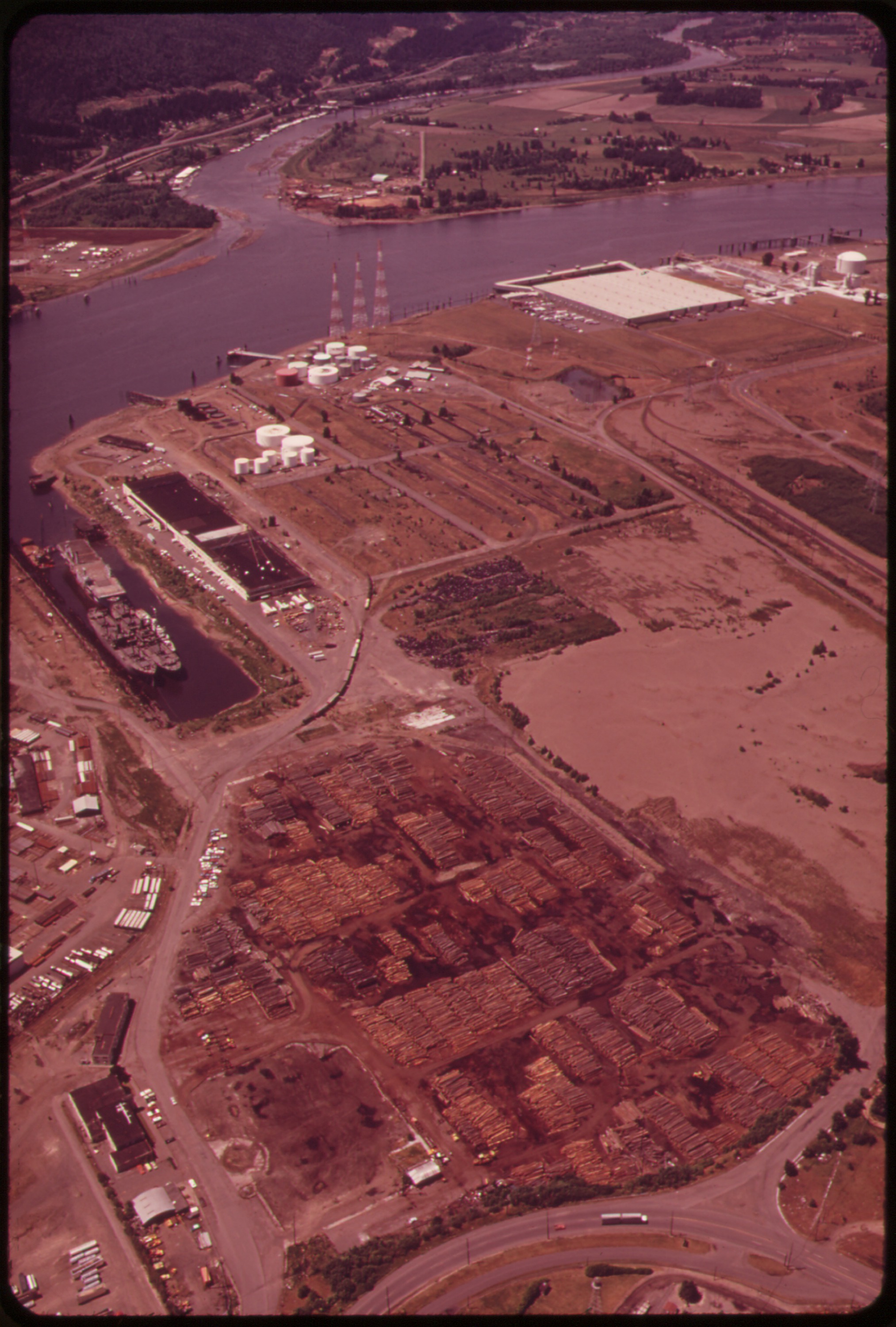
The yard had two thousand bodies on it the year that picture was taken. The street had four bars, three diners, two schools, a hall, and a clinic. The river is the same river. The fence is the same fence. The buildings are the same buildings.
The furnace went cold in 2003. I was a year older than you are now. I watched the gate close. The yard was sold three times in nine years. The bars closed. The two schools went to one. The clinic moved. The street that carried two thousand bodies carried four hundred.
This is what it looks like now from the south gate. The picture's been on the wall above the table since the year the furnace came back on.
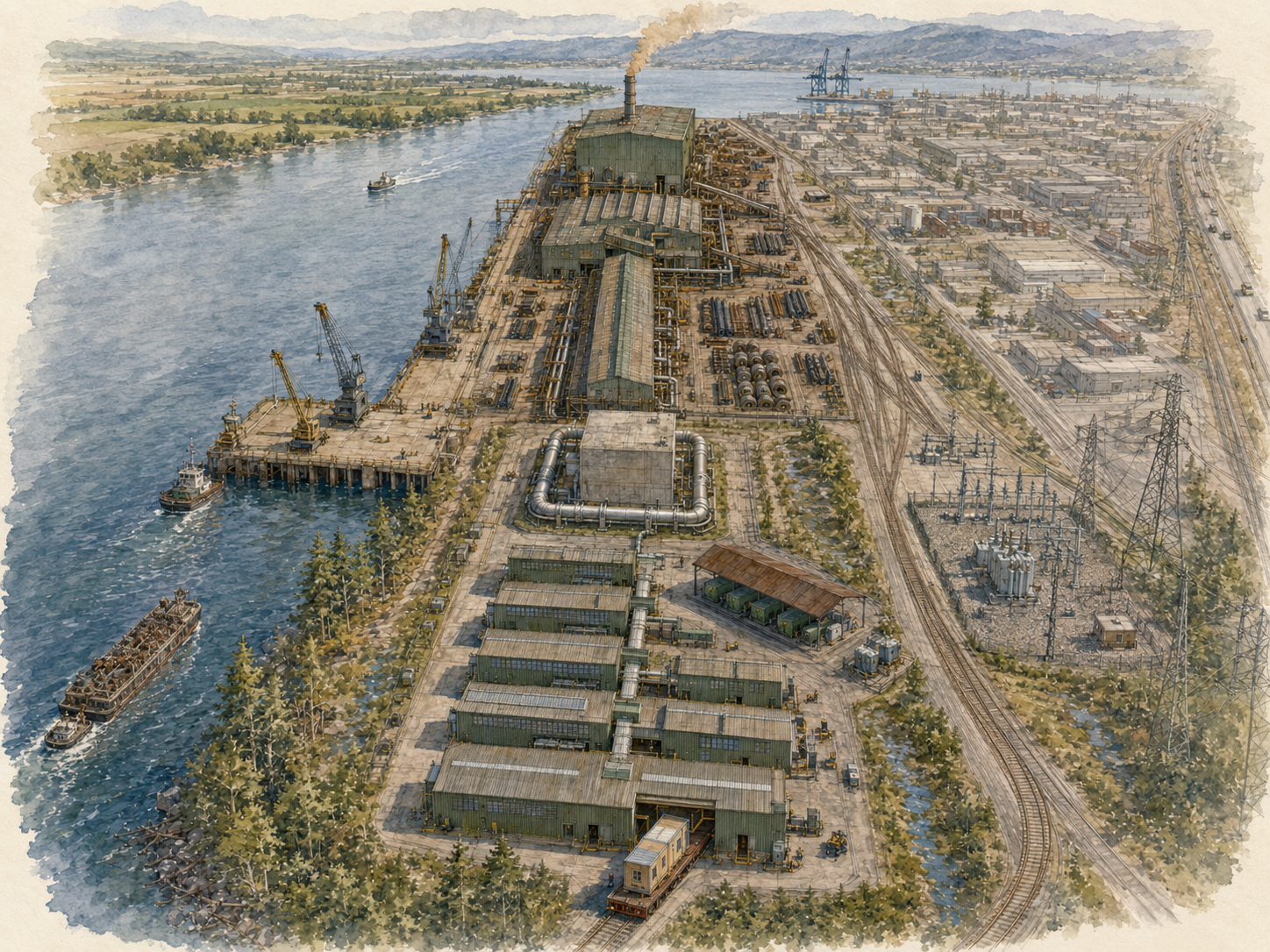
We put it back to work. The country owns the furnace this time. The steel I tapped this morning is bound for a wall four blocks east, set on a foundation in Hamtramck, for a family that signs one page.
They put the battery bank up east of the gate in '32. They put the reactor pad north of it in '34. Both came from the country, not from anybody we bought from. Neither was on the parcel the morning your great-grandfather walked through it for the first time.
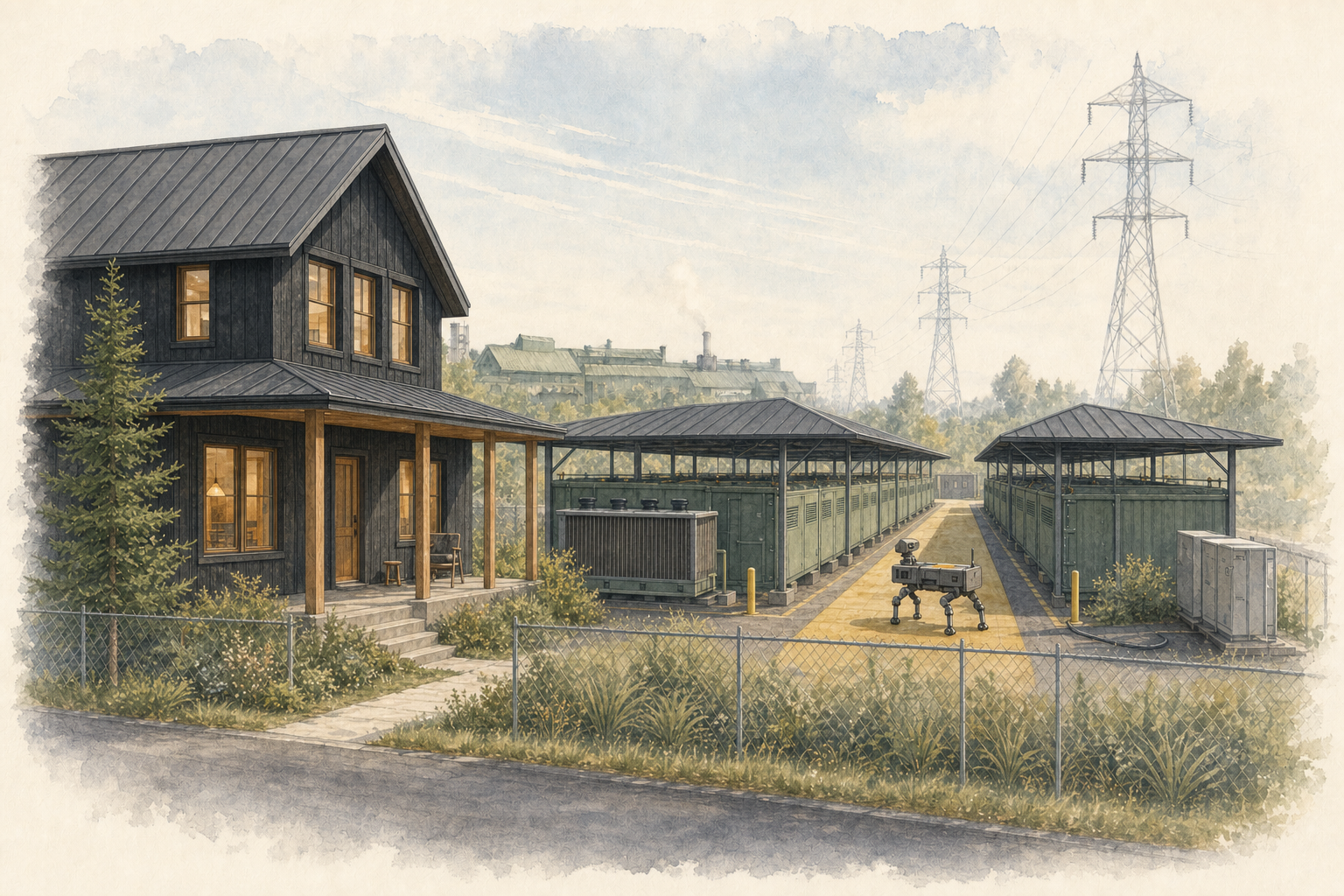
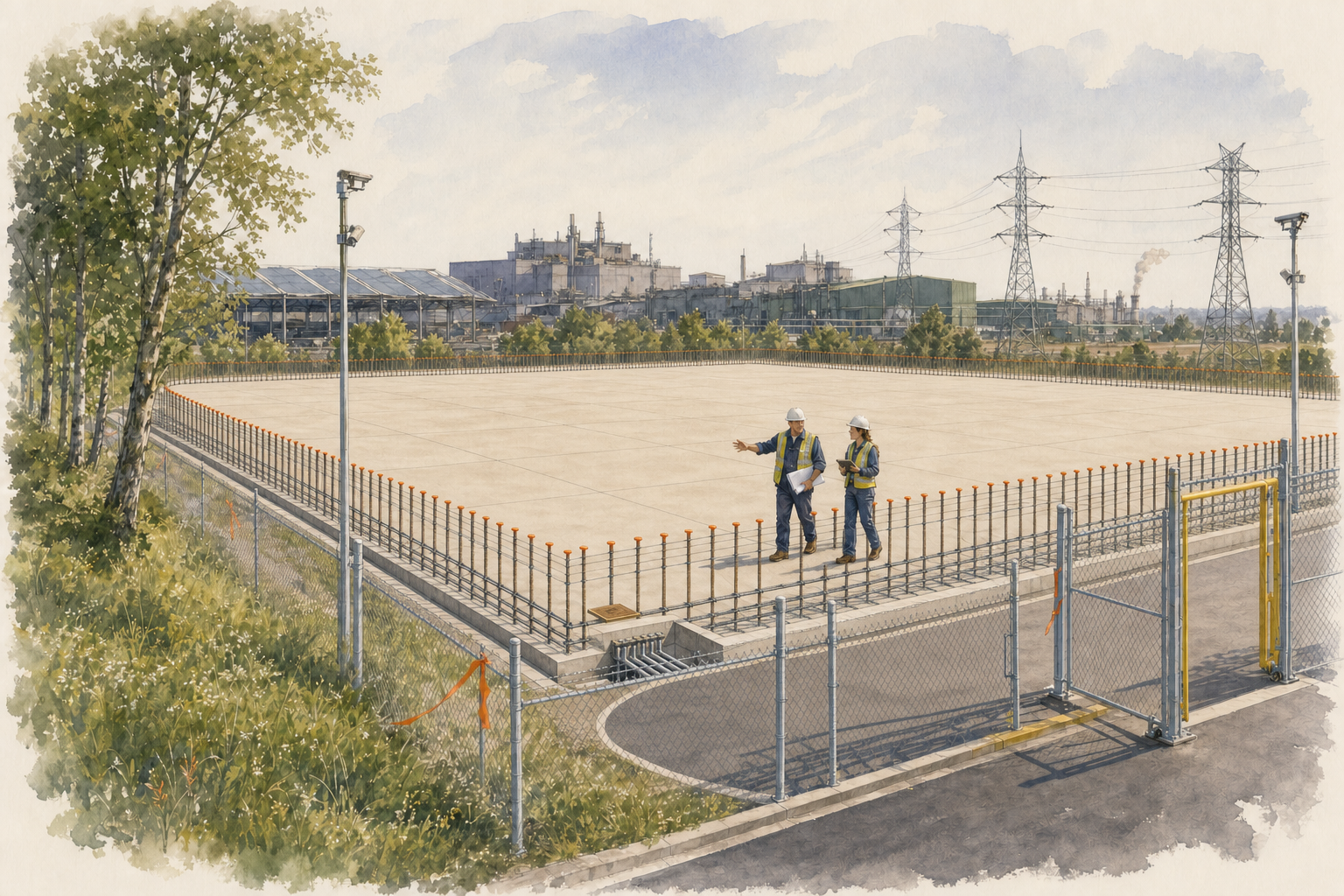
That's the place. Now I'll tell you the rest.
Your great-grandfather, my dad, came home on a Saturday in March of 1998 with his lunch pail in his hand and never carried it again. He was fifty-one. The shop he ran the floor at for twenty-two years had been sold the Tuesday before to a group out of Pittsburgh, and the Pittsburgh group sold the building to somebody else by Friday, and on Saturday the locks were different. He stood in the kitchen with the pail in his hand. He didn't sit down. He put the pail on the counter and he looked at it for a long time and he didn't say anything.
He was a steel man. He was a steel man for ten more years after that Saturday and he never worked steel again. He did some house painting. He drove a route for a bakery for a while. He took care of my mother when she got sick. He was good at all of it and he was none of it. The man who came home that Saturday is not the man who left the house that morning, and I want you to know I watched that and I have carried it.
I am not going to tell you he drank, because he didn't, much. I am going to tell you he got quiet, and the quiet was a quiet I learned to recognize in other men on the block, and there were a lot of other men on the block. Whatever they took from him on that Tuesday in Pittsburgh, they took it from a lot of houses on our street, and none of those houses got it back in his lifetime.
I want to tell you about some men, because in the morning you are going to be on the floor with them or with people like them, and I want you to know who taught me.
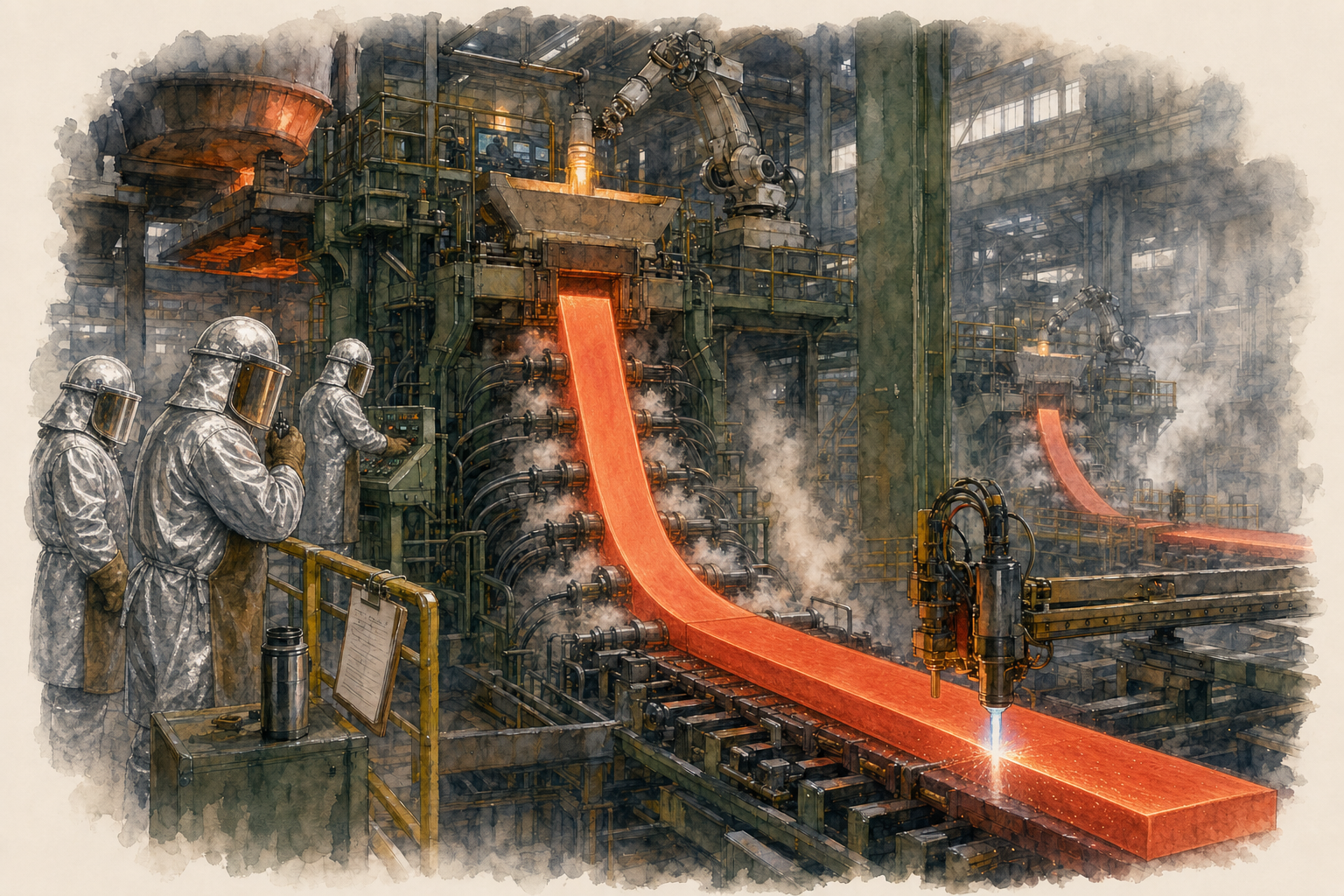
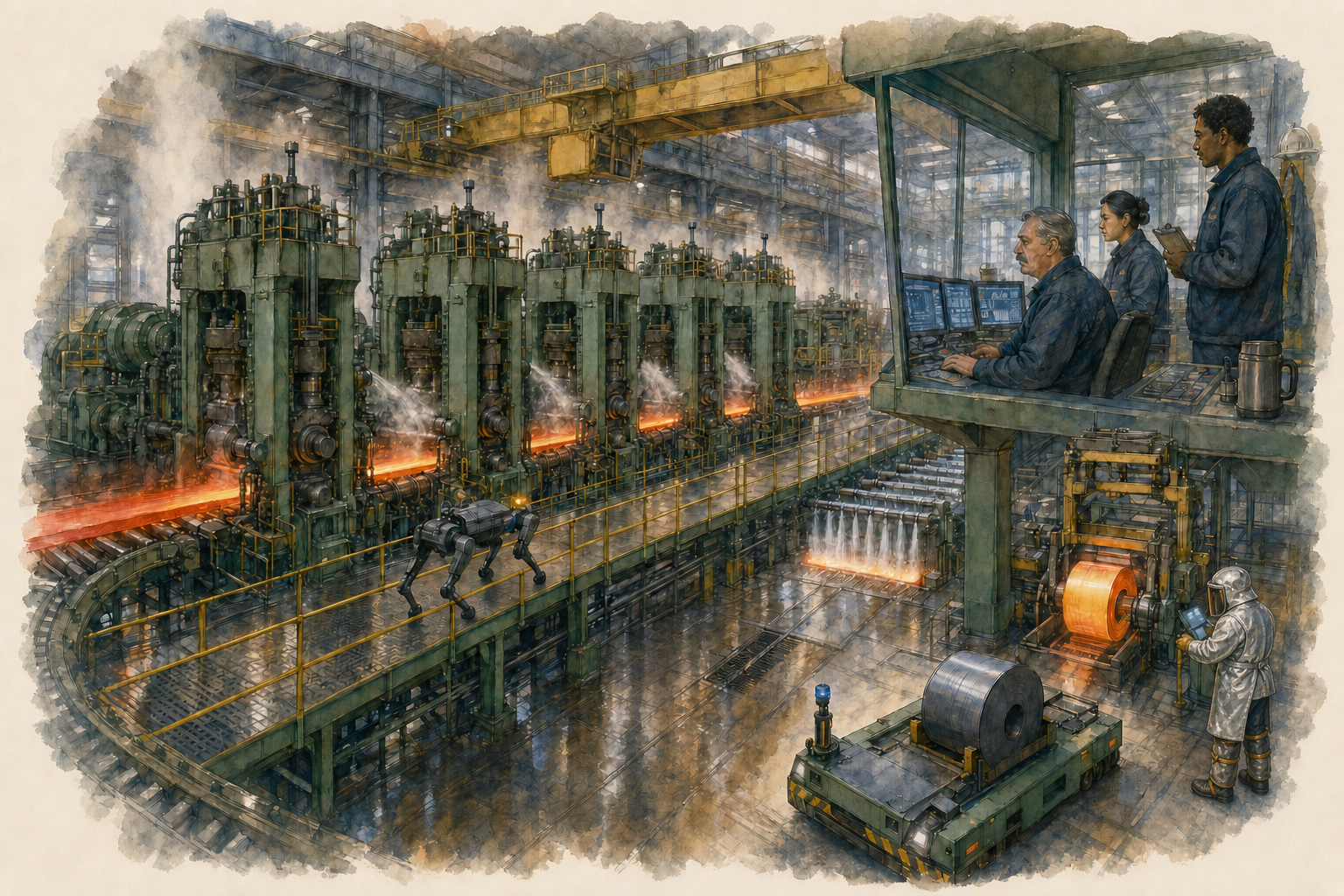
Earl Mavins taught me to read carbon. He stood next to me at the spectrometer for two years and he never once read the number for me. He'd say what do you see, and I'd say what I saw, and he'd say read it again. He retired in 2034. He still comes to the Tuesday breakfasts.
Hank Pulaski taught me the strand. He told me the meniscus tells you before the gauge does, and the gauge is the last to know, and your eyes are the first. He'd stand at the rail and he wouldn't say anything for ten minutes and then he'd point and say there, and you'd see it.
Donna Reese ran the pulpit when I came up, and she taught me the finishing pass is a question you ask the steel and you listen for the answer. The first time I called eight against a ten she stood behind me and she didn't say a word, and when the coil came clean off the line she put her hand on my shoulder and walked off. She runs second shift now. She'll be on tonight while you sleep.
Carl Bremer ran dispatch for nineteen years before the morning the screen went dark, and he ran it for eleven more after. He wrote the names on the board himself, every morning, with a grease pencil. He taught me you do not let a screen write a man's name. The body is in the room. You write it yourself. When you walk through the gate at six tomorrow, find him at the board. He is the one with the grease pencil. Stand next to him. Watch him write the names. Don't ask him where to go. He'll tell you when he's ready. By the end of the week he'll hand you the pencil and walk off the floor.
A lance man named Tommy Vega held a heat in 2019 against a target his foreman told him to ship. He got written up for it. The heat he held was the heat that didn't crack a beam in a school in Toledo. Tommy is sixty-one and he is on the floor with me right now. He taught me you hold. You stand there. You let the chemistry walk down. If the chemistry is not where it is supposed to be, you stand there until it walks down. You do not ship a bad heat because somebody's number says ship. There is no number that big.
Our local steward when I came up was a man named Eddie Krol. He started the Tuesday phone call between our pulpit and the wall shop in '34, back when nobody had told us we were allowed to. He said the pulpit answers to the press brake. He said that twenty years before anyone made it doctrine. He said it because it was true. When the call comes through to you from a wall shop wanting eight instead of ten on the finishing pass, you give him eight. You do not hand him off to a sales desk. There is no sales desk.
Frankie Demarco was on the floor with us through restart. He's in Cleveland now. I haven't seen him in eight years.
Those are some of them. There are more. You will meet some of them in the morning.
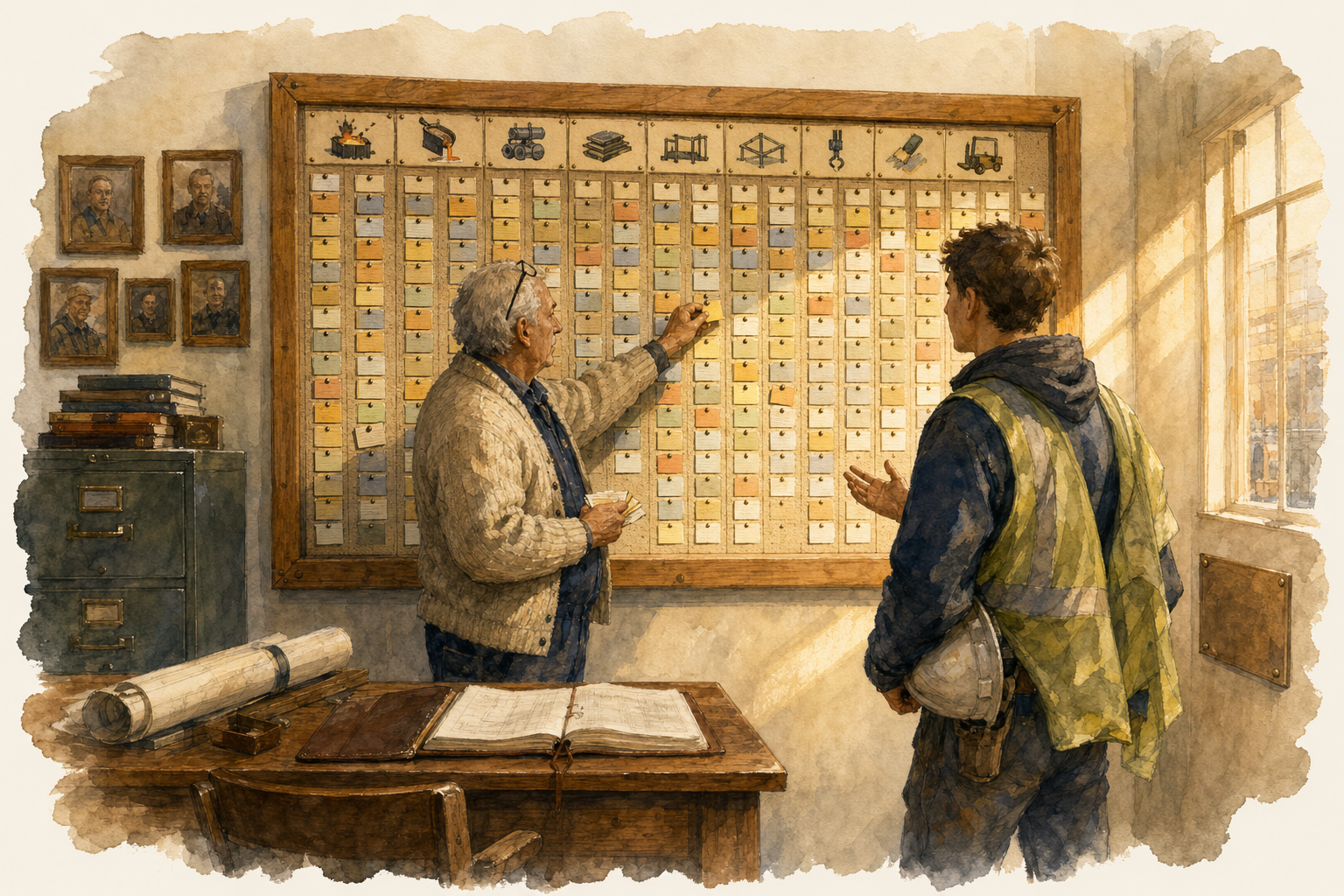
You came up through the Learning Corps branch on Wabash. Two years of trade school. You have the certificate. You have the union book. You know the chemistry on paper. The certificate is the certificate. The book is the book. The floor is the floor. Carl teaches the floor the same way he taught me, and the same way Earl taught me to read carbon and Hank taught me the strand. He doesn't say much. He doesn't have to. Stand next to him.
That's how the trade gets handed down. From the body who knows it to the body who is about to. The Learning Corps gives you the certificate. Carl gives you the floor.
I want to tell you about the morning the screen stopped writing names.
I don't remember the date. I remember it was a Wednesday and it was cold. The screen in Stamford had been writing the crew assignments for twelve years. You'd come in at six and the board would already be lit and the names would be on it and half the time the names were wrong, because the screen didn't know who was sick and didn't know who had a kid in the hospital and didn't know that Earl had been working with the new kid all month and the new kid needed Earl on Wednesday.
That morning the screen was dark. Carl Bremer was standing at the board with a grease pencil. He looked at me and he said morning, Ray, who's on. And I told him. And he wrote it down.
That was the morning. I know there was a vote, and I know there were a lot of meetings, and I know somebody signed something in Washington. I didn't see any of that. I saw Carl with the grease pencil.
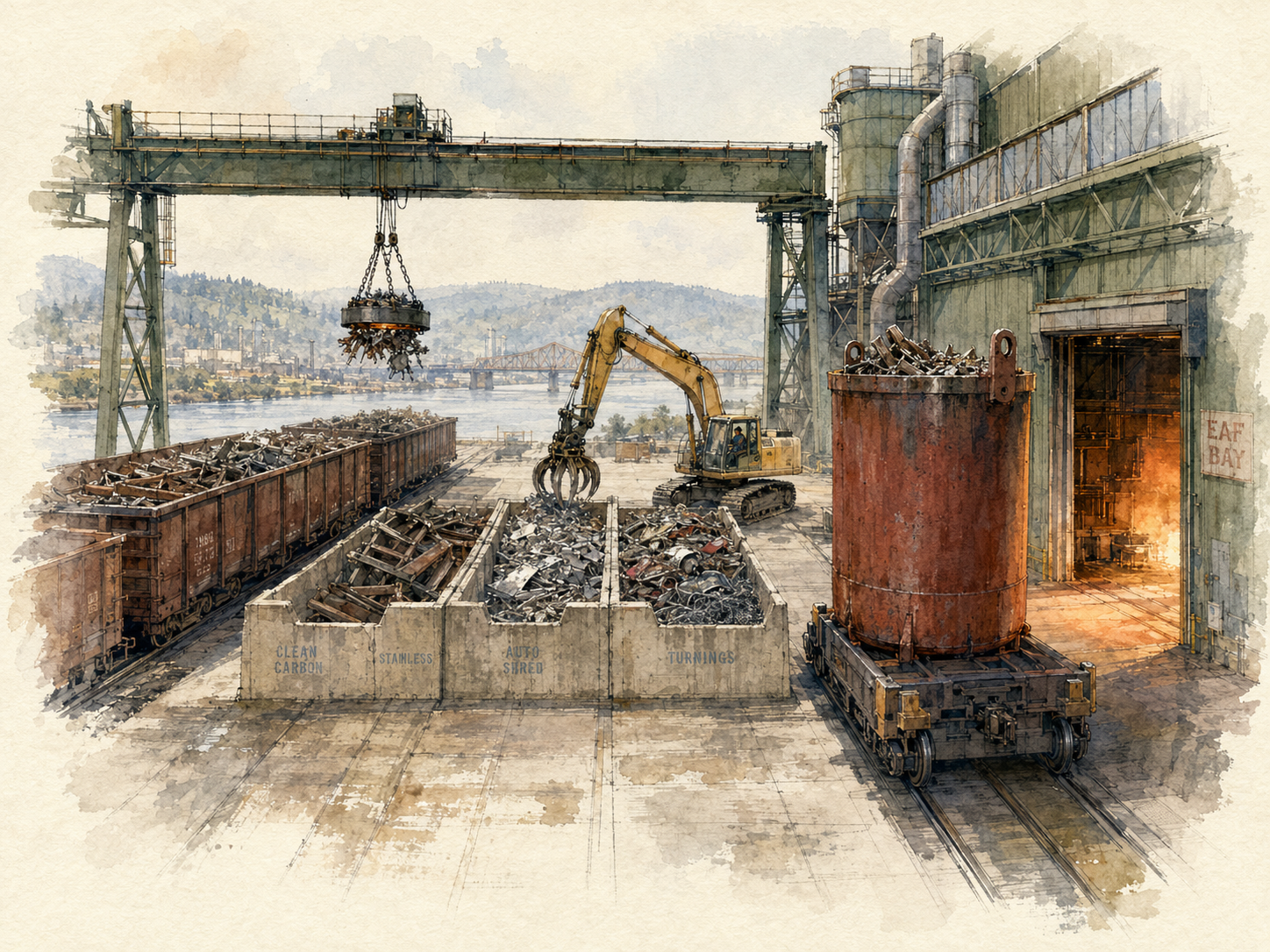
The first bale I sent back was that same week. A galvanized I-beam in a scrap load, plating still on it. The broker's truck was idling at the gate. Under the old way you signed the slip and the zinc went into the bath and the bill went somewhere upstairs and nobody you knew paid it. I told the broker to put it back on the truck. He told me he had somewhere to be. I told him I did too and it wasn't going to be three shifts cleaning the baghouse. He left. He didn't come back. Somebody else weighs scrap for us now and the bales are clean.
The first heat I held was a month after that. Carbon read high on the second sample and the old number in my head was ship it and write the variance and let somebody upstairs argue. There was no upstairs. I stood there. The chemistry walked down. We tapped at four minutes late and the coil ran clean and nobody wrote me up because there was nobody whose job was to write me up. The Manufacturing Corps does not buy bad heats from itself.
The first Tuesday call I made, I called the wall shop direct. I asked what their press brakes wanted that month. The man on the other end told me eight, not ten, on the finishing pass. I called eight on the next coil. The coil went out the south door at noon and was framed into a wall by Friday. The call was between two crews and the call was free.
I am telling you this because nobody is going to tell you it happened. Nobody is going to write it down the way it was. It was a Wednesday and it was cold and Carl had the grease pencil. That's how it started. That's all of it.
Your mother is on third shift right now. Beth is at the Linnton works, the millwright bay. She'll be home around 7:30 and she will want to see you in your boots before you go. Don't make her wait at the door.
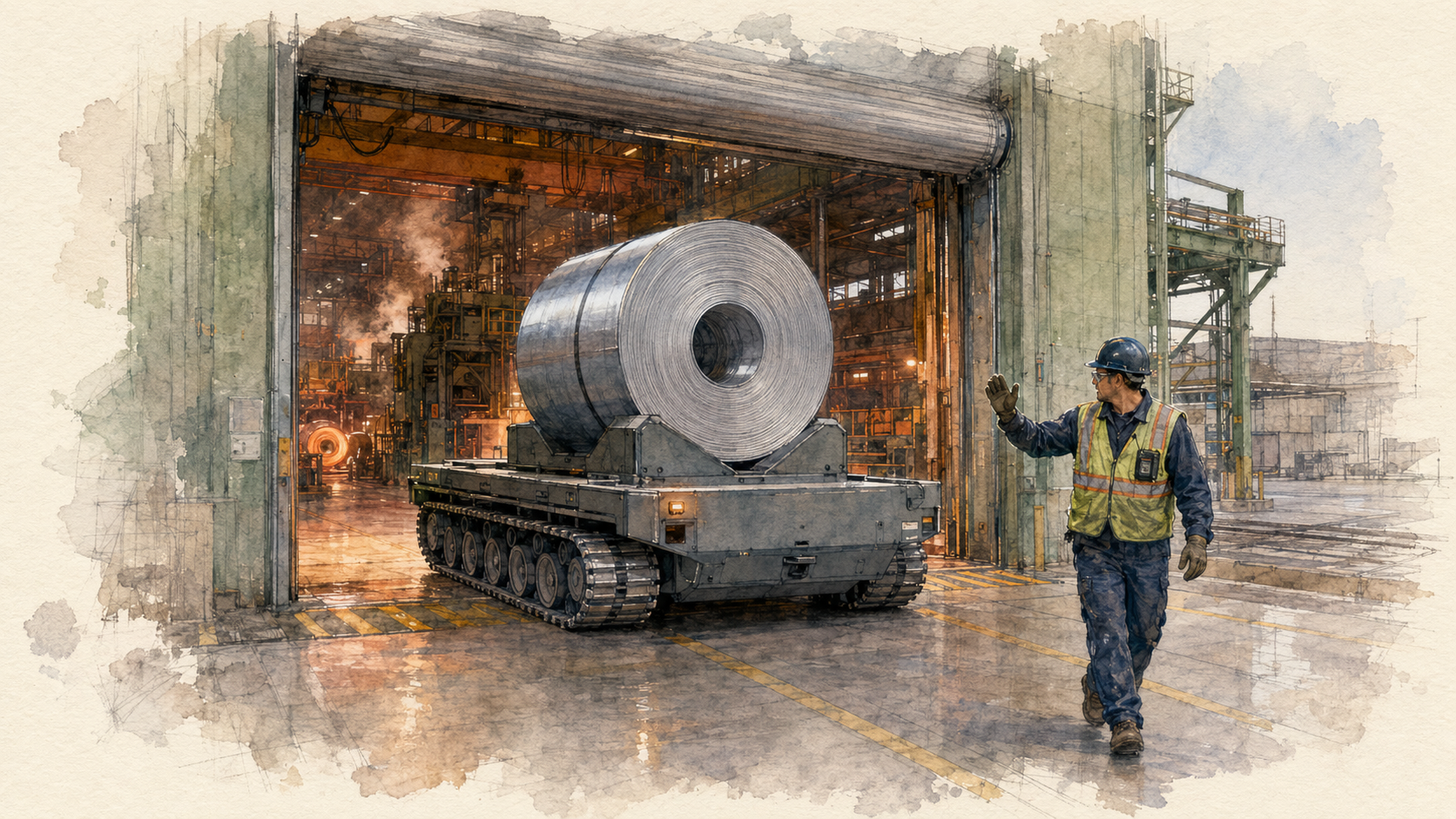
Your cousin Janelle is at the wall shop, the Mill Bend floor, on the layout jig. Your first heat tomorrow afternoon goes to her shop. She will not know the coil is from your shift and you will not tell her. That is how it works. She'll frame the wall and the wall will go somewhere and a family will sleep behind it. That's the chain. You're in it now.
One thing before I sign. Hold the heat. If the chemistry is not where it is supposed to be, stand there until it walks down. Do not ship a bad heat because somebody's number says ship. There is no number that big. They took that from your great-grandfather. I got it back. I am handing it to you whole.
I'm going to sleep in a minute. I'm proud of you. I have been proud of you a long time. In the morning you carry the pail your great-grandfather put on the counter in 1998. He would have liked to see it. I'm going to see it for him.
— Raymond Briggs
Local 64, retired · Rivergate
P.S. Your pail is rinsed and on the counter. The sandwich is in the icebox. Don't forget it on the porch like last Tuesday.
Daniel takes the floor in the morning. The coil leaves the south door at noon. The wall is four blocks east. Walk to the wall →
- Walk to the wall. Six voices from the block where the coil becomes a wall.
- Read the amendment.
- Share this page with one working American.
Rivergate · One letter · Filed under THE WORKS · Issued May 2026